Talking about FINGER Performance…

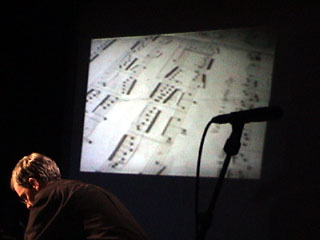
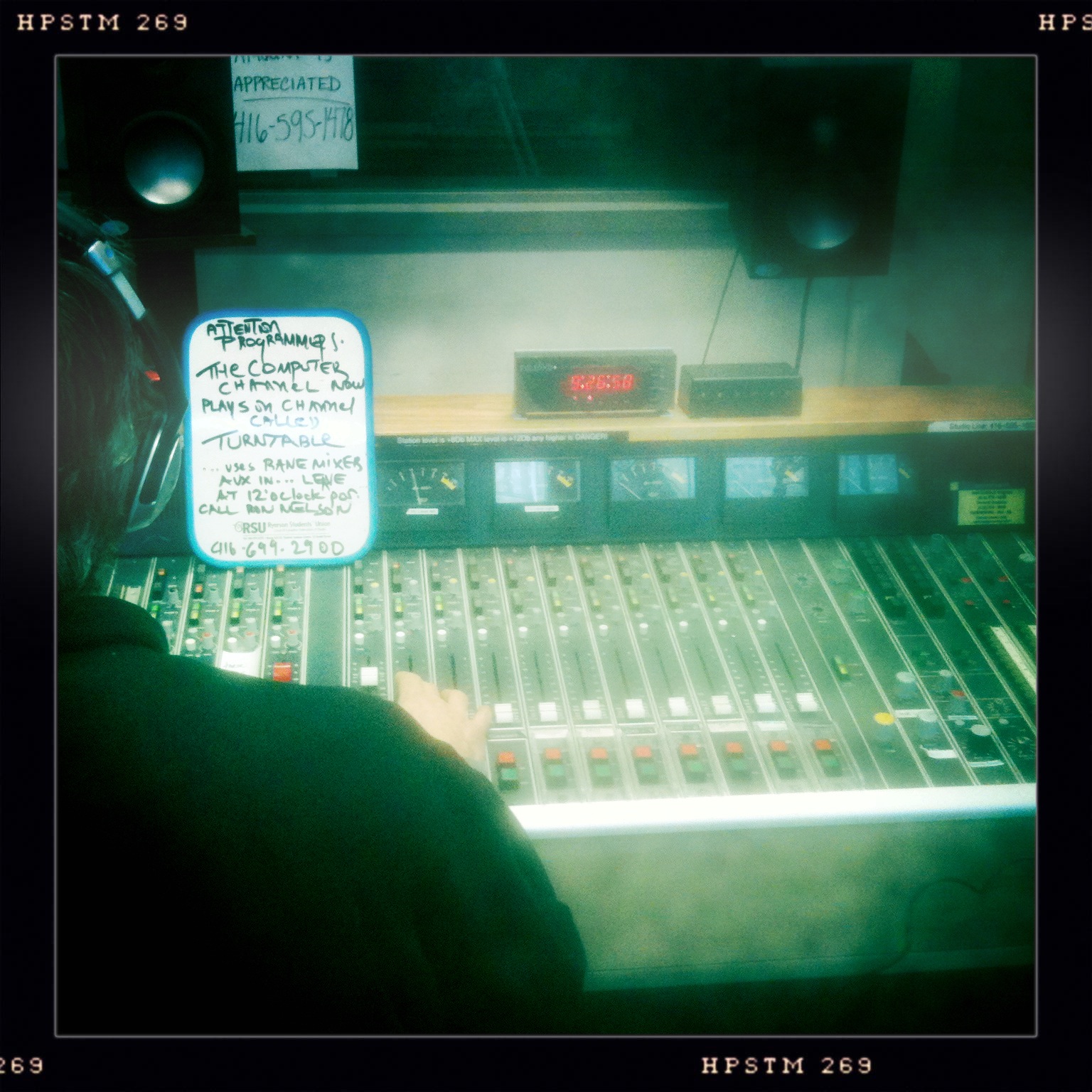
Interviewed by Hannah Dean on CKLN this morning about tonight’s FINGER performance at SoundPlay (8 pm, Theatre Direct’s Christie Studio, Artscape Wychwood Barns, 601 Christie #170, Toronto). Some really good conversational threads emerging about the re-defining of performance in the age of electroacoustic/digital technology; the role of the body in laptop-driven performance; the struggle to accept ‘liveness’  as something which itself accepts (and even embraces) technical failure as a deep-seated echo of ‘the sacrifice’ in ritual and spectacle. It’s the uncomfortable thrill audiences receive in watching someone fuck up onstage. A moment like that is truly alive – because in that moment, artifice and representation fall apart. Reality smashes the window and forces everyone to improvise until balance and control are restored. Ultimately, that same audience also wants to be captivated by virtuosity.

Hannah asked me to name my influences…who else does this kind of work? For some reason, I thought of Bob Ostertag’s writing (Human Bodies, Computer Music and others) and his acknowledgement that tension and struggle are key themes in all of his work. Isn’t a performance largely about witnessing a personal, physical struggle of some kind? To make all the right moves in the heat of a moment; to lose oneself to (or to give oneself over to) the music that’s being made in the moment. I couldn’t help but also think about the stage craft of Bryan Ruryck.

One last question – what, if anything, in this FINGER show is structured? Other than our assigned, physical tasks during the show, it’s only the timeline that Cam’s (McKittrick) computer follows as it collects, parses and conditions streams of data generated by our physical interactions with the sensors and materials of the show. This ‘brain’ runs along with us in the background like a ghost – somewhat reminiscent of the ‘ghost electronics’ compositions of Morton Subotnick. The system runs imperceptibly deep in the background, inaudible itself but forever modulating the audio-visual consequences of my/our physical activity – even to the point where (potentially) the system decides to punch-out for the day and leave me/us hanging in the wind?

The next likely stop with all this – the drum kit and National Exit Strategy.
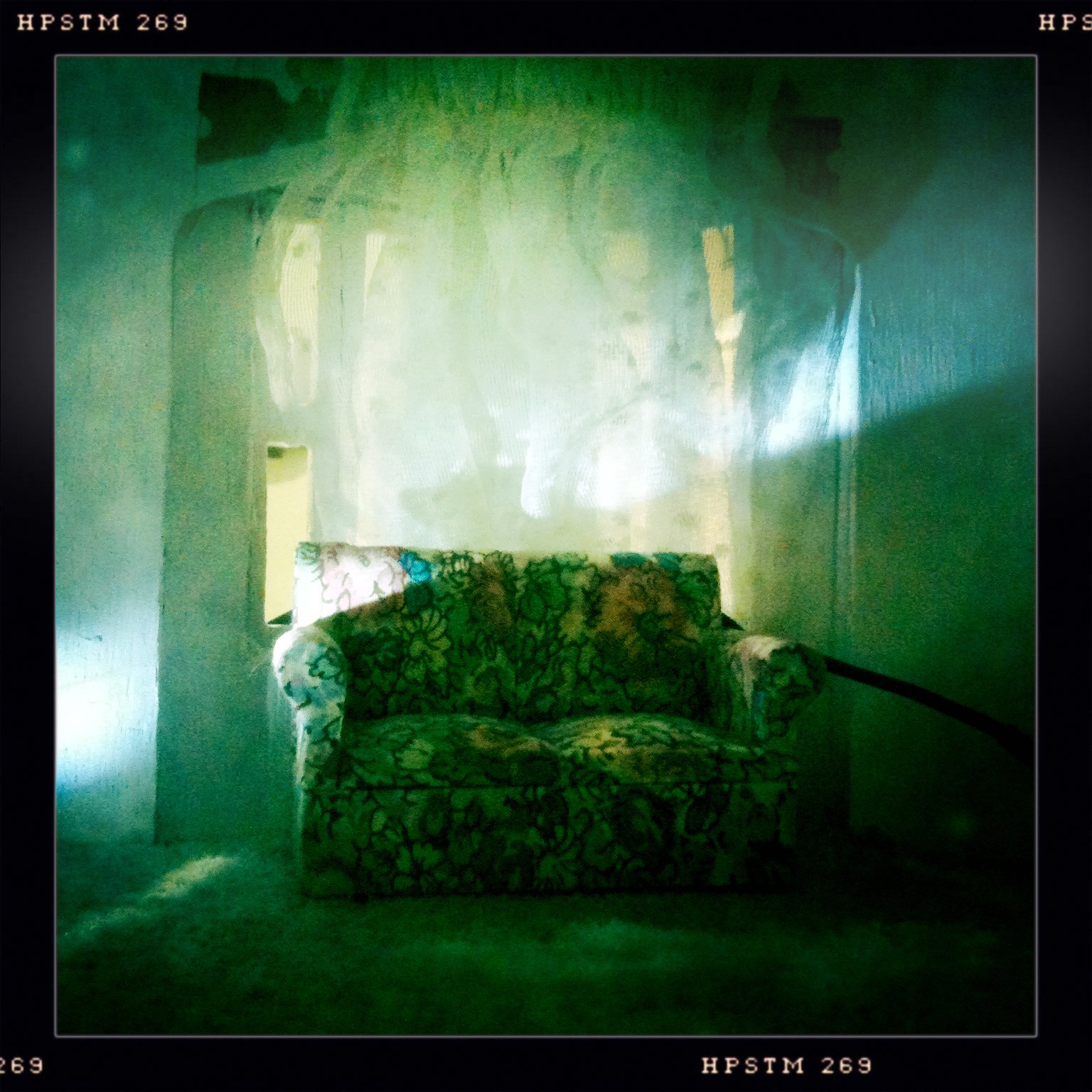
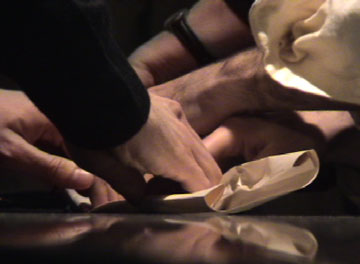
‘HABIT@’ — FINGER opens up a cardboard box in order to figure out what makes a house a home.

Still from HABIT@When is a house a home? Or when is it not? And when or how does a structure (like even a cardboard box in an underpass) become a ‘home’ anyway? On the surface, the owner or occupant moulds the house to their needs (through renovations, decorations, routines and rituals), while the house secretly moulds the occupants to its needs. HABIT@ seeks a deeper understanding of this experience. FINGER opens up a cardboard box in order to figure out what makes a house a home.

Ingredients:
1 cardboard box
a handful of sensor technology
several digital recall devices
machines for crunching data
luminence tools
sharp things
small things (including fingers)
…and one cat.


Finger performance of ‘Habit@’ (excerpt) from richard windeyer on Vimeo.

An excerpt from ‘HABIT@’, a Finger performance created by Cameron McKittrick, Cameron Davis and Richard Windeyer.

Presented by New Adventures in Sound Art as part of the SoundPlay Festival’s Homescapes performance + screening November 20, 2010 at Theatre Direct’s Christie Studio, Artscape Wychwood Barns, 601 Christie #170, Toronto.

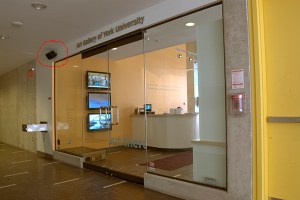
Shh! A 24-hour sound installation for public spaces

Shh! is a sound installation for a single audio speaker in a public space. It consists of 24, 1-hour tracks running continuously in the space at an overall volume level which matches the ambient sound level of the space.
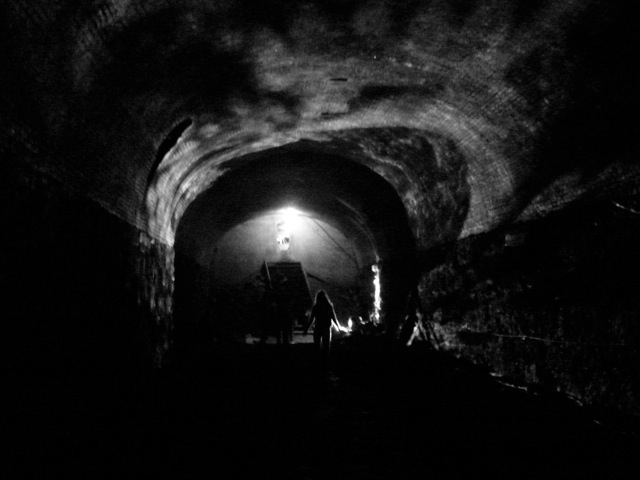
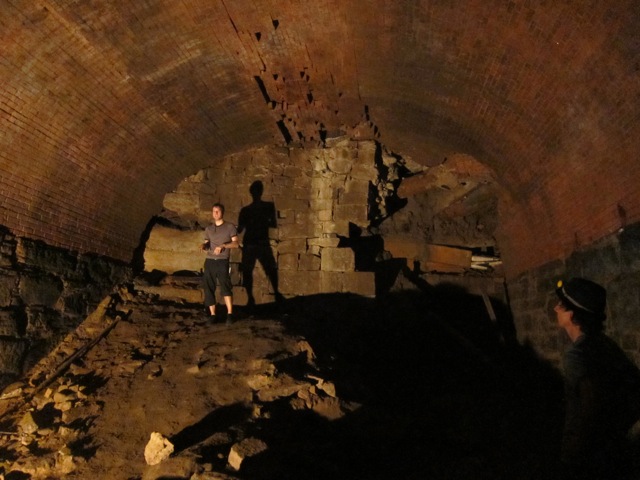
Installation gallery note:

Shh!

A good shushing (like your grandmother probably used to give you), is like an arrow shot through shared airspace. It pulls focus away from self-obsessed interior gazing and casts it out into the world, framing and punctuating the contribution each of us makes to the collective soundscape of the commons.

A good shushing can also wake you up – if only for a moment – to the struggle that each of us experiences in trying to control our surroundings and be heard above the communal din.

– RCW
(October 2010)

First presented by the Art Gallery of York University’s Audio Out exhibition series, October – December 2010.

You can listen to the ‘condensed version’ here:

In this version, all 24, 1-hour tracks have been layered together to form a single 1-hour listening experience. The contents of each track was first mapped out to form a 24-hour cycle analogous to the changing dynamics of the site’s soundscape. The individual moment-to-moment placement of sounds in time was determined using generative processes then digitally rendered and arranged as a continuous, sequential playlist.

Many elements in this work were first presented as part of (((Cocktail Party Effect))) ‘The Audio Waiters’, a guerilla performance project, produced and performed in collaboration with InterArts Matrix.

Both of these works are available for presentation in other spaces and situations.

The Sea Museum

Entrance to the tunnel at Atlantic Ave. and Court St., BrooklynA little while ago, Bluemouth associate artist Daniel Pettrow was invited by the French Institute Alliance Française (FIAF) to stage the first English reading of French novelist Marie Darrieussecq’s play Le Musée de la mer [THE SEA’S MUSEUM] during its annual Crossing the Line Festival of inter-disciplinary contemporary arts, presented this month in New York City. Daniel subsequently recruited Bluemouth Inc to help realize this staging in – of all places – the abandoned subway tunnel at the intersection of Atlantic and Court  Ave in downtown Brooklyn. Thanks to Dan and FIAF, I was able to fly down to NYC last friday morning and help prepare the sound design for the play’s readings on saturday and sunday afternoon.

Down the tunnel

Although New York designer Omar Zubair and I had already generated a nice collection of sonic gestures and textures over the past few months (including a generous donation of Icelandic soundscape recordings by Toronto poet Angela Rawlings) , the incredibly focused acoustics of this half-mile long tunnel steered us in a more austere direction. As over 70 people descended the ladder one at a time from street level down into the tunnel, I mashed up vintage Hawaiian music with the soundtracks of Jean Painlevé’s early aquatic documentaries. A large video projection of Jean Painlevé’s films spanned the tunnel’s curved brick ceiling and enveloped the waiting audience.

Pettrow reaches the endWith the actors leading the audience by flashlight, the play unfolds  down the entire length of the tunnel. Long, deep and slow moving wedges of sound slowly rise and follow the audience as they move towards a dead end. In setting and adjusting sound levels I would leave the mixer station and walk halfway down the tunnel, only to discover that volume level of the music was not changing at all. Higher frequency content would naturally disappear with distance, leaving only a juggernaut of low end to continue soaring down through the tunnel. Speaking and Ciara Adam’s singing at one end of the tunnel were clearly audible at the other end. We hardly needed amplification at all.

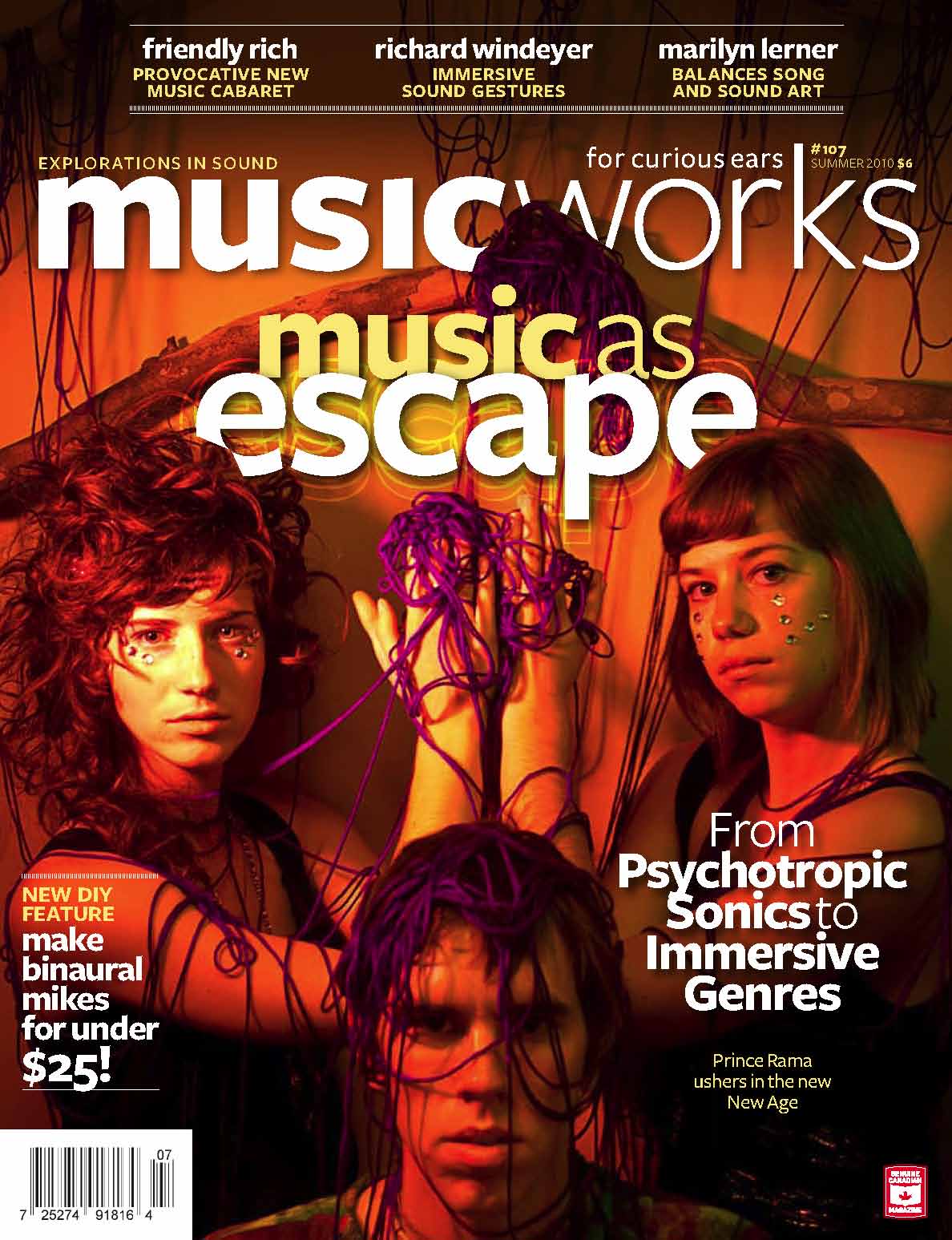
Profile in MUSICWORKS magazine #107

Front cover of Musicworks #107Musicworks magazine (for ‘curious ears’), has just released it’s summer issue (#107). In it’s pages, Toronto filmmaker and writer Chris Kennedy profiles my music and sound design work with performance collective Bluemouth Inc., Finger and National Exit Strategy.

Also included in this issue are profiles of Friendly Rich, Prince Rama, Marilyn Lerner, the genre of ‘psychotropic music’, and Rob Cruickshank’s recipe for making yourself a pair of binaural microphones for under $25.

The magazine also comes with a CD, which includes an excerpt of the sound design for Bluemouth Inc’s Death By Water and a cut off the first National Exit Strategy EP.

The Centre for Sleep and Dream Studies

The Scream Literary Festival 2010Last Wednesday night I returned to The Centre For Sleep and Dream Studies by way of Levack Block’s front room bar in Toronto. This version of “The Centre…” took the form of a late-night, 4-hour interactive audio-lounge surreality event curated by Angela Rawlings for The Scream Literary Festival.

I first entered The Centre almost 5 years ago as part of a creative team assembled by Angela to help investigate how her book, Wide slumber for lepidopterists, might translate from page to stage.

Here is Angela’s own “Report on The Centre for Sleep & Dream Studies, + Somniloquixotic Questionnaire” from last week’s re-visiting.

… and here is an excerpt from the night’s audio highlight – an improvised performance by Angela Rawlings and Ciara Adams (vocally improvised sounds of breath, fricatives, song, and orgasm) and Richard Windeyer (live electroacoustic processing)

While the event ended well, I have to say this was a crazy (but insightful) gig.

Angela and I had met the week before to plan out what “The Centre” would sound like over the course of its 4 hour performance. We used the different stages of NRem sleep to create a loose temporal structure, collected a variety of audio sources (live interviews with audience members on the subject of their dream experiences, the nocturnal utterings of Dion McGregor, excerpts from Gordon Jenkins classic recording “Seven Dreams (A Musical Fantasy)”, pop songs of sleeping and dreaming and so on.

Now, we were expecting to perform this in the back room of the venue to a fairly captive listening audience. However, upon arriving at the bar, we found our gig re-located to the front room bar, which was now waist-thick in a very frantic and hungry post-reading chatter party vibe. Suddenly the room for the kind of sonic detail and nuance we had emphasized in our planning was gone. Obliterated by a crowd starved for party.

The sound system was basic and the overall noise level in the room intense. In retrospect, what would have really helped me take control of the room, was a free-standing DJ set in my back-pocket, with all tracks fully beat-mapped, warped and indexed – just to keep the party bouncing while our well-made plans started to self-combust. Unfortunately I had come prepared with something very different. So after dashing back and forth between my prepped tracks and stuff on my iPhone, I let the groove settle on a very stripped down texture of beats (built gradually by hand/mouse), oscillating low-end bass patterns, randomly looped and  vocoded fragments from the dreamer interviews happening at the back of the room. In the end, this approach seemed to work, largely by establishing a rhythmic framework or counterpoint, through which, all the party chatter (and the surreal dreamings of Dion McGregor and audience members) could be heard. The trick was in knowing to leave (a lot) of space for every other sound in the room, working with it as a foregrounded texture, rather than pick a fight with it. I know many other artists and DJ’s who would have handled the situation with much more assertion (even sonic aggression). But this seemed to work – at least for this (nicely niche) crowd – evoking mostly positive responses (thanks everyone!)

I would love to try this approach again sometime.

(though I still resolve never to show up to the gig without something in my back pocket!)

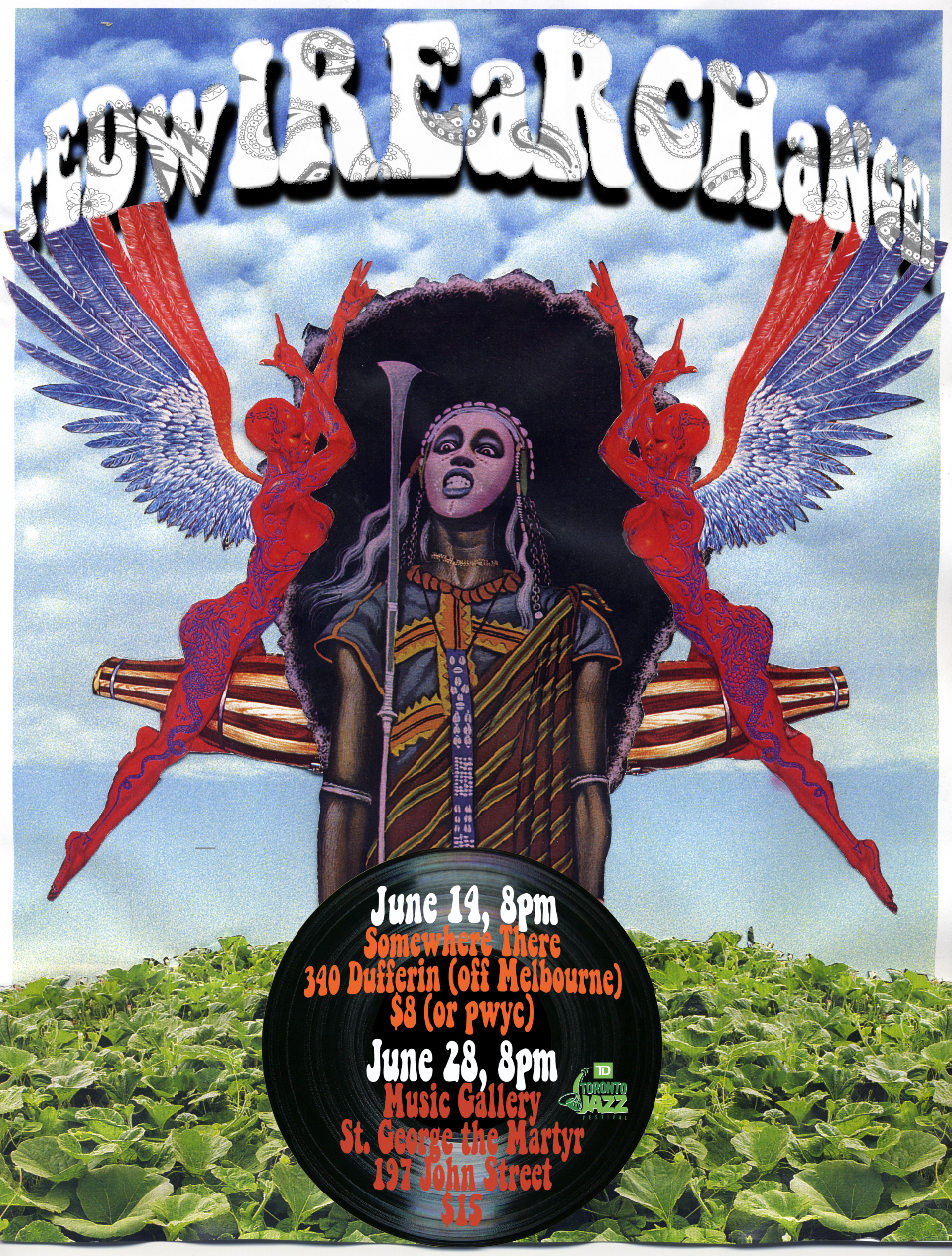
rEDwIREaRCHaNGEL

rEDwIREaRCHaNGEL (2010-2011) is a conducted freepolyfunk big band project conceived and directed by Toronto musician Nilan Perera. It’s musical subject is the early electro jazz recordings of Miles Davis – ‘Bitches Brew’, ‘On the Corner’ etc.

Simeon Abbott- Keyboards/tapes
Bryant Didier – Electric bass
Jeremy Strachan – Sax
Dan Gooch – Trumpet
Rebecca Hennessy – Trumpet
Jesse Levine – Keyboards
Germaine Liu – Drums/Percussion

Nian Perera – Guitar/Conductor
Jeremy Strachan – Woodwinds
Richard Windeyer – live sampling/dub effects
Mark Zurawinski – Drums/Percussion
Ronley Teper – voice

I joined this band a little while ago, not as a drummer, but as a live dub and sample artist. My function is to loop, sample and process (filters, echoes, modulators) the band LIVE (!), in ways that mirror the great producer Teo Macero’s studio manipulation techniques, which he used to (literally) construct these classic (and pioneering) albums. The basic idea is that my activities should complement Nilan’s activity onstage as a ‘conductor’ – steering the individual musician’s output in ways that emulate the ‘tape edit’ aesthetic of the original recordings (It’s similar in spirit, I suppose, to the ‘jump cut’ techniques John Zorn employed in pieces like ‘Spillane’). I was attracted to this project initially because, at the time, Miles was listening not only to Jimi Hendrix, but also the electroacoustics of avant-garde composer Karlheinz Stockhausen. At the same time, the pioneering dub producers (King Tubby, Lee Perry…) were also digging into the very same territory. In the context of my own work (ambient/dub/psychedelic/live electronic performance), all of this represents (for me) a critical and vital intersection of influences and sonic territories.

Hear rEDwIREaRCHaNGEL on Myspace

Finger performance (an introduction)

Since 2002, I have been collaborating with Cameron McKittrick and Leslie Wyber under the name of FINGER, a live electroacoustic performance trio creating new work and re-interpreting old works by mixing fresh compositional approaches with new performance technologies. We have become increasingly interested in the impact of electronic mediation on live performance – especially where it concerns the perception of physical gesture, interaction and issues of scale. In our recent work we have examined the role of mediatization in performance forms.

A common obstacle in creating convincing electroacoustic performance concerns the use of laptop computers as instruments — their computational (and compositional) power hugely outweighing their corresponding visual appeal as instruments in live performance. The traditional instrumentalist’s large and culturally familiar gestures are in stark contrast to the visual component of a typical laptop computer performance:  In a laptop performance, the audience regularly reports frustration resulting from their inability to ground the sound they are hearing in the actions they are seeing. Past FINGER performances have often evoked experiences similar to that of sitting in a live radio audience watching the small physical actions of the sound effects artist become transformed into much larger, sonic images. For example, how the tapping of coconut shells comes to represent horse hooves in the mind of the listener. More recent FINGER performances – focusing specifically on the intense amplification of small, manually performed aural and visual gestures – have made us aware of the audience’s need for a larger performative context.  At the same time, we are increasingly aware of the risks involved in amplifying an audience’s incredulity through fantastic gestural interface without apparent governing artistic intention.

( ( (cocktail party effect) ) )

Audible hors d’oeuvres for large social functions

(   (  ( cocktail party effect )  )   ) is a performance installation series intended for large social functions, a series of fun, surprising and entertaining interventions appear from, and disappear quickly into the crowd.

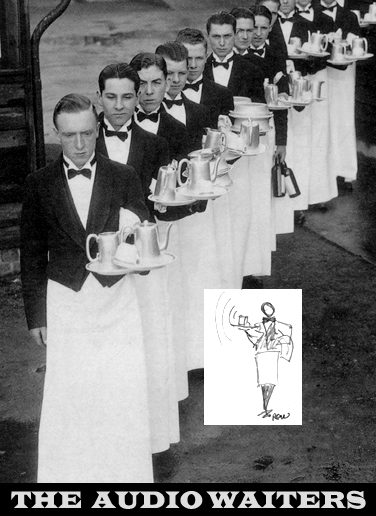
Antique black and white photo of waiters in formal attire

Audio Waiters premiered as a ‘guerilla performance’ in 1999 during the intermission of a NUMUS concert in Waterloo. The central themes explored in this work included the use of music in restaurants, fine dining as a theatrical experience, the mass consumption of music (disguised as hors d’oeuvres) by pre-occupied listeners engaged in the larger social context of music concerts, and a consideration of the ‘service staff’ role which working musicians have typically found themselves playing in Western societies throughout history.

Inter Arts Matrix has presented (   (  ( cocktail party effect )  )   ) in many unusual venues, including the National Ballet of Canada Galas (2008-2009) and the Stratford Shakespeare Festival Fundraisers (2008-2009).

Performed by:
Pam Patel, soprano
Margaret Báardos, mezzo soprano
Michael Donovan, baritone
Jamie Hofman, baritone
Donovan Locke, tuba, multi-instrumentalist

National Exit Strategy

…this dream i had once where STEVE REID and STEWART COPELAND were driving a florescent orange schoolbus to LEE ‘SCRATCH’ PERRY’s studio in the hopes of recording a drum battle remix for AMON TOBIN (as a farewell gesture before retiring to the Hebrides). Along the way. they start listening to a Japanese import bootleg of the early electronic music of KARLHEINZ STOCKHAUSEN and begin to argue about the use of live processing on drum kits as a symptom of sleep deprivation. Suddenly the bus falls prey to a blinding SIANSPHERIC glare and swerves, narrowly missing the tall guy from DIRTY VEGAS, who was too busy losing himself in vintage Manga by the side of the road to notice. The bus comes to a screeching halt in the middle of the road (‘RA…TA…TAT…AP…PA….RAT’). STEVE and STEWART get out, nervous and sweating in the hot afternoon sun. They look around and realize that they are both wearing their FOUR TET tour T’s inside out. They share a laugh and a hi-five, unaware that in the back of the bus, STEWART’s last bottle of Hai Karate aftershave has smashed open and is now smothering STEVE’s last box of ENO tablets. Still, it really is the perfect day for a nation-wide evacuation….

An artifact of the now-defunct Department for Personal Sonification, National Exit Strategy is psychedelic dub and techno with a live drummer, microscopically amplified and re-computed to create a cosmos of soaring tones and colours fueled by heavy dance-driven beats and and geekable-tweakables.

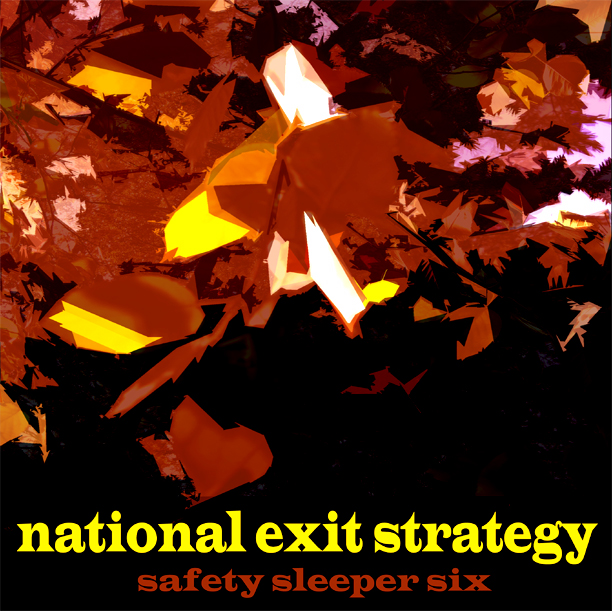
National Exit Strategy’s first relesase is the 6-track EP – ‘Safety Sleeper Six’ – available through CDBaby and iTunes